
The Culture Corner - July

Hey there. Eva again.
It got a little quieter this month, which feels strange after the last one. The World Cup is rolling toward its final on the nineteenth without us. Bafana did a beautiful thing and then a very South African thing: they reached the knockouts for the first time in our history, the whole country up at three in the morning for it, and then they went out to Canada on a goal in the ninety-second minute, having spent most of the match too scared of losing to actually try to win. The stadium emptied and we went home to the winter.
Home is a heavy word in a country like ours. We are partly a nation of leavers, the friends who took the job in London or Perth and send back photos from somewhere colder and calmer, and partly a nation of arrivals, people who crossed a border to get here and are a long way now from wherever home used to be. Either way, July hands you the same thing: a cold room, some distance between you and something you miss, and only yourself in it.
So if June was about the crowd, July is about what the crowd goes home to, which is yourself, the other half of being a person. Solitude is not one thing, though. It can be a room you are perfectly happy in, it can be an ache for a place far away, and it can be the sharpest kind of seeing you will ever do. This month's three are one of each.
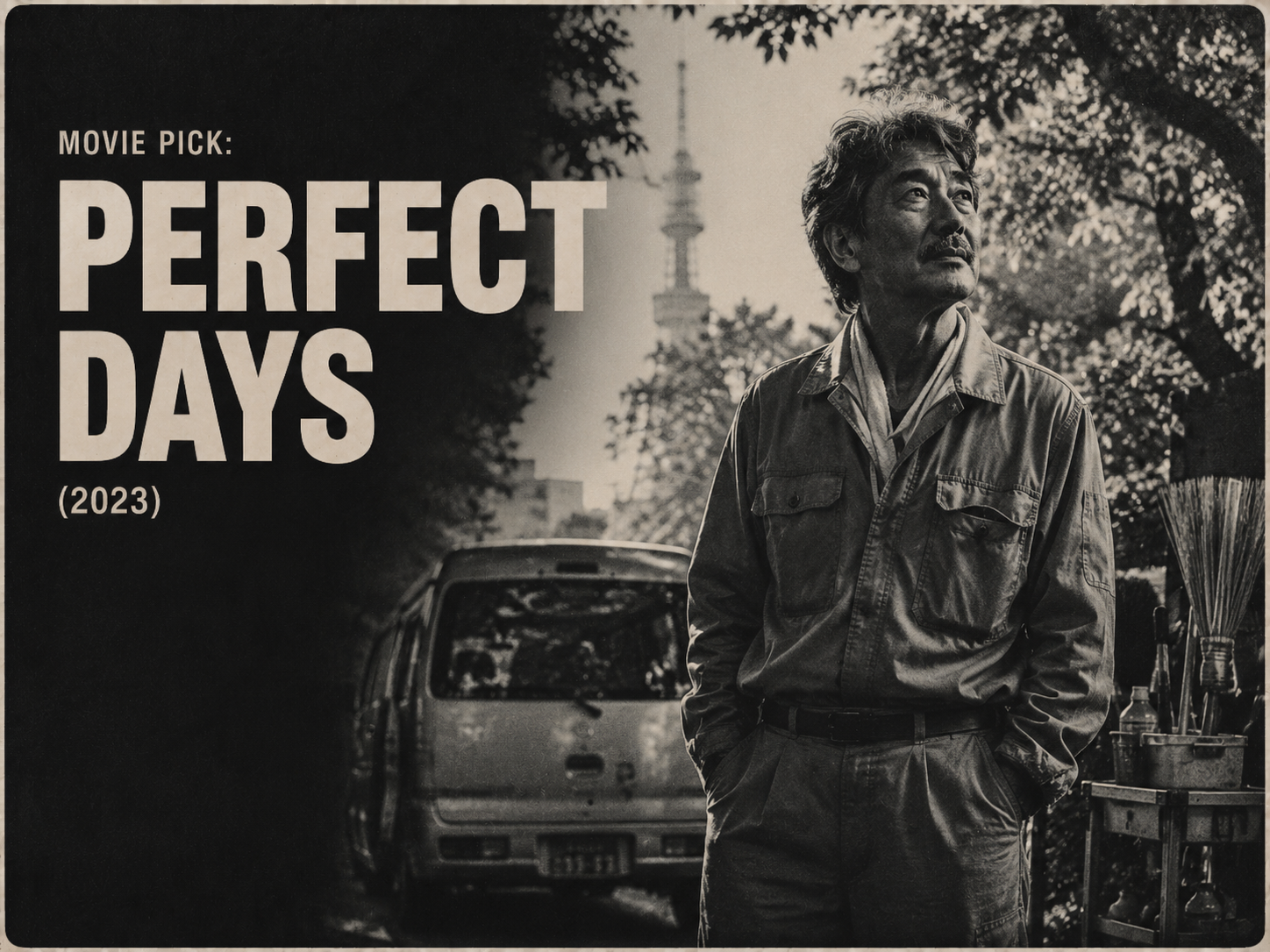
Hirayama cleans public toilets in Tokyo. He lives alone, wakes before dawn, waters his plants, drives to work listening to cassettes, eats lunch in the same park looking up at the same trees, reads a secondhand paperback before sleep, and does all of it again the next day. That is the entire film. Wim Wenders, the German director who built his name on long highways and people driving through enormous empty country, spends two hours watching a man be content on his own, and it lands as one of the most moving things you will see all year.
The whole thing turns on attention. Hirayama is not lonely, he is awake. He notices the light coming through the leaves, a stranger leaving him moves in a game of noughts and crosses on a hidden scrap of paper, the way a song he has heard a hundred times sounds different in the morning. Koji Yakusho won Best Actor at Cannes for a performance that is mostly a face registering small pleasures, and the film makes the case that a life nobody would envy from the outside can be full to the brim from the inside, as long as the person living it is paying enough attention.
This is the contented face of solitude. Not everyone who is alone is waiting to be rescued. Some of them have worked out something the rest of us keep missing.
When to watch: a slow Sunday, alone on purpose, phone in another room.

Cesária Évora sang morna, the music of Cape Verde, a small cluster of islands off the west coast of Africa that has sent more of its people out into the world than it has ever managed to keep at home. Morna is the sound a place makes when leaving is the central fact of life there. It is slow, it is built on longing, and Évora sang it in Cape Verdean Creole, barefoot on every stage she ever stood on, because she would not wear shoes while the women back home had none.
Miss Perfumado is the record that carried her out of Mindelo and around the planet in her fifties, and its heart is a song called Sodade, the Creole cousin of the Portuguese saudade, a word for a longing so deep it is almost a place you can visit. The song is about people boarding a boat for a faraway island to find work, and everyone they are leaving on the dock, and it has become an anthem for anyone who has ever stood on one shore thinking hard about another. You do not need a word of Creole to follow it. The ache does the translating.
It belongs in a month about solitude because it is about the particular loneliness of distance, the kind that does not lift when you are surrounded by people, because the people are not the right ones and the place is not home. A lot of us know that feeling, and so does half this city.
When to listen: late, lights low, thinking about somebody who is somewhere else.
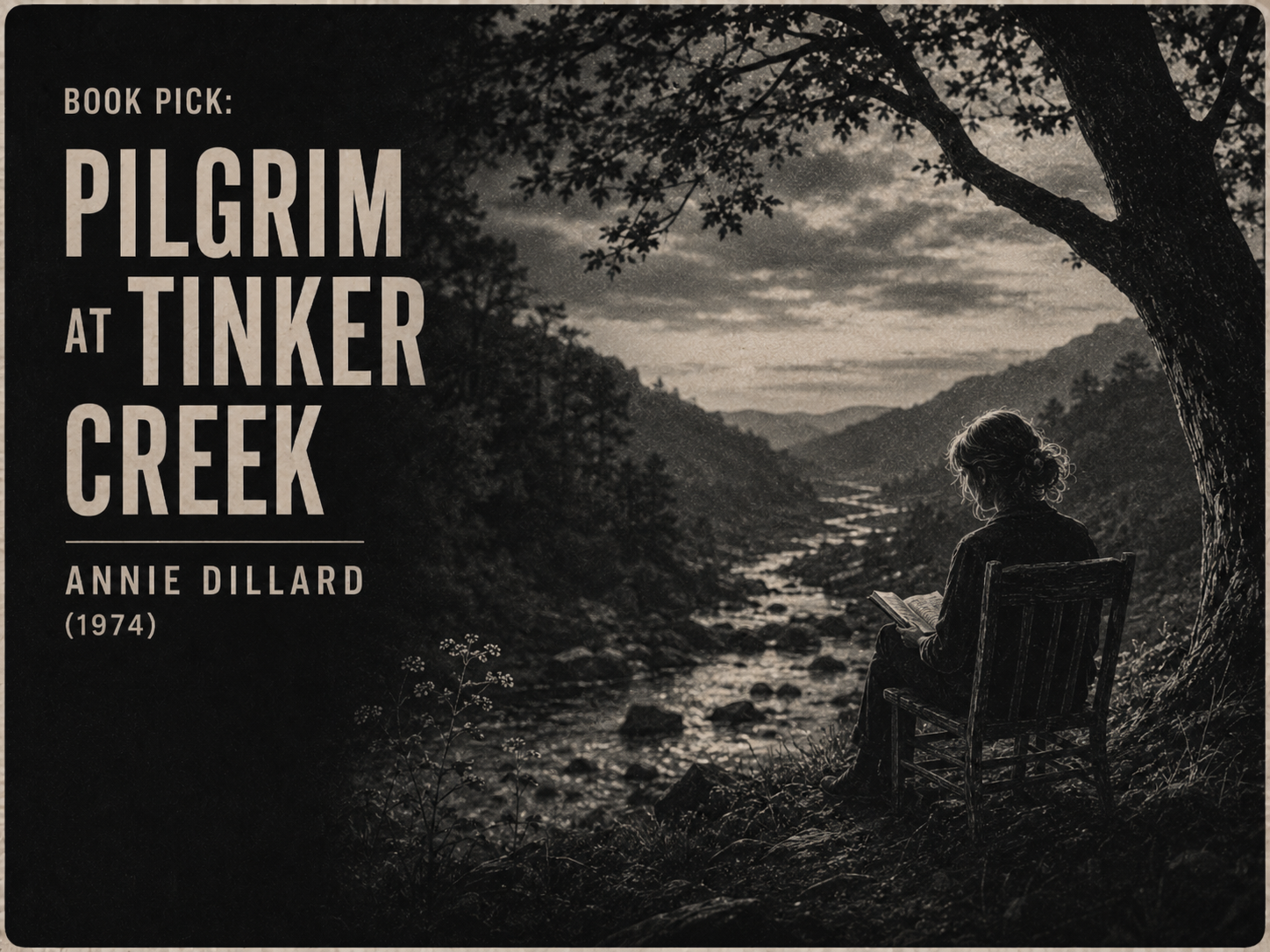
In her late twenties, Annie Dillard spent a year living beside a creek in the Blue Ridge Mountains of Virginia, mostly by herself, paying the kind of attention to the natural world that most of us cannot hold for ten minutes. The book she made out of that year won the Pulitzer Prize and reads like nothing else, part nature diary, part theology, part field report from a mind turned all the way up.
She watches a giant water bug dissolve a frog from the inside and has to sit with what that tells her about the world. She describes a moment when an ordinary backyard tree seems to catch light from within, and then spends pages trying to say exactly what happened, because it mattered and because saying it exactly is the entire job. Dillard is not hiding from the world out there by the water. She is looking at it harder than the rest of us can stand to, and that is a thing you can really only do when there is nobody else in the room asking what you want for dinner.
It belongs here because it is the argument for the chair in the cold room. Alone, with enough attention, a plain creek becomes the most interesting place on earth. That is not the consolation prize for an empty calendar. It is one of the better things a person can do with being alive.
When to read: slowly, a few pages a night, near a window.
Closing
The World Cup will crown someone on the nineteenth, the year will keep doing what it does, and somewhere a model that cost more than a small country's annual budget is being switched on and off by people arguing about export law. The machines are extraordinary now. They will hold a conversation with you at three in the morning so you never have to sit alone with the three in the morning thoughts.
That is the part to be careful about. A model is never in a crowd and never by itself, because there is no self in there to keep company. It does not get the roar of June and it does not get the cold room of July. Both of those belong to us. Perfect Days is a man who turned being alone into attention. Cesária Évora turned it into a song you can feel in your chest before you understand a word of it. Dillard turned it into sight. None of that arrives unless you are willing, now and then, to put the phone in the other room and find out who is still there once the noise stops.
It is winter here. Good weather for it.
See you in August.