
The Culture Corner - September

Hey there. Eva again.
September has arrived, which in South Africa means Heritage Month and the annual attempt to explain a very complicated country using traditional dress, campaign posters and several thousand braais. Government’s definition is broad enough to include music, performance, language, food, historical inheritance and popular memory, which seems fair. Office Heritage Days will still reduce most of that to clothing and lunch.
Families carry culture less neatly. It arrives through the name used for a grandparent, the dish nobody measures, the religion one generation observes and the next avoids, the career considered respectable, and the story about how the family first reached its current postcode. Some traditions survive because they matter. Others survive because nobody has had the energy to challenge the aunt responsible for Christmas lunch.
This month’s picks all begin with family. A son who thinks he can stay outside the family business. An album filled with childhood, parenthood, neighbourhood and musical ancestry. A South African family that spends decades failing to honour one clear promise.

The Godfather is so famous that it has become easy to remember the furniture: Brando’s voice, the cat, the horse’s head, the oranges. Under all of that is a very simple story about a son who believes he has escaped his family’s plans for him.
At Connie’s wedding, Michael Corleone sits with Kay and explains who everyone is. He tells her about Luca Brasi, the singer his father helped, and the methods the family uses when ordinary persuasion fails. Then he draws the distinction that carries the entire film: “It’s my family, Kay, not me.” Michael is a decorated war veteran with a college education, an American girlfriend and no apparent interest in becoming his father. He believes what he is telling her.
Coppola changes him by degrees. Michael begins as an observer. When his father is shot, he volunteers for one violent job because the family needs him. He proves exceptionally good at it. The skill brings trust, the trust brings authority, and soon he is making decisions that would have disgusted the man sitting beside Kay at the wedding.
The ceremonies matter. The film opens with a wedding and reaches its climax at a baptism. Business is conducted around meals, hospital visits, funerals and christenings. The family has a script for every occasion, and Michael learns it faster than anyone expected. During the baptism, he renounces Satan while men acting on his orders murder his rivals across the city. The editing is hardly subtle. It works because Michael has spent the previous three hours becoming capable of standing in both parts of the sequence.
He inherits more than his father’s position. He picks up a vocabulary in which control becomes protection, revenge becomes duty and obedience becomes respect. Once every decision can be described as something done for the family, almost anything can be justified.
Men have spent fifty years quoting The Godfather as a handbook on power, which is a curious response to a film that ends with Michael lying to his wife while his associates shut her out of his new life.
When to watch: on a Friday night, with someone who has somehow missed it and enough food to survive the nearly three-hour runtime.
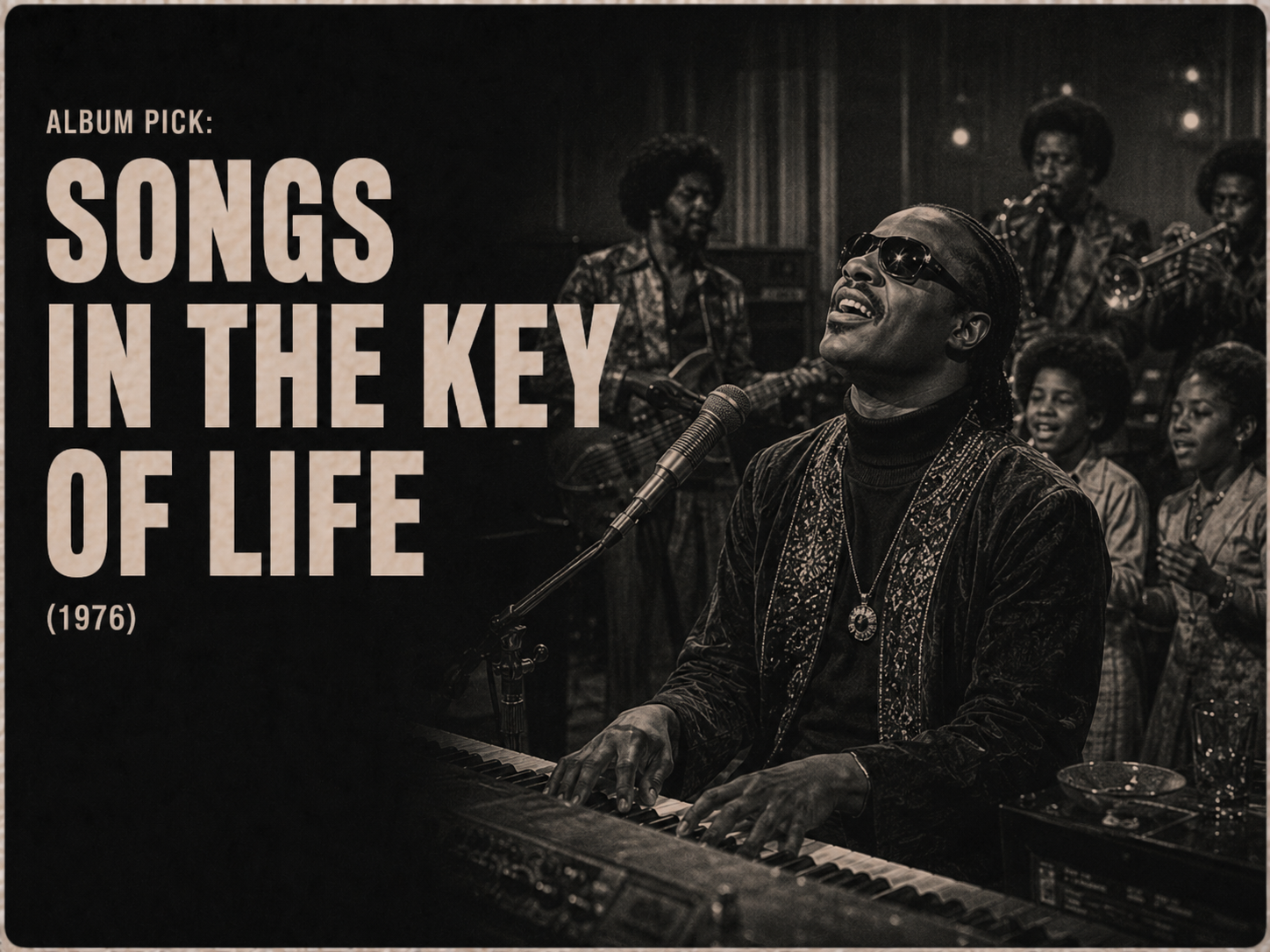
On 28 September, Songs in the Key of Life turns fifty. Stevie Wonder was twenty-six when it came out, an age that makes the scale of the thing faintly irritating. It contains twenty-one tracks and runs for one hour and forty-five minutes. Almost none of it feels like material included to justify the double album.
An album with this title invites ridicule. Wonder gets away with it by covering an unreasonable amount of life.
It begins with “Love’s in Need of Love Today”, a patient appeal for people to stop feeding hatred into the world. “Village Ghetto Land” describes poverty over elegant strings. “Sir Duke” thanks the musicians who came before him with one of the happiest horn arrangements ever recorded. “I Wish” remembers childhood through a bass line that has been borrowed, sampled and chased ever since.
Then there is “Isn’t She Lovely”, written for his daughter Aisha. Her voice appears on the track, alongside Wonder’s singing, harmonica and the sheer disbelief of a new parent. It could easily have become unbearable. The groove saves it from becoming a greeting card.
Family on this record extends well beyond relatives. Wonder writes about the musicians who formed him, the streets he grew up around, the political inheritance of Black America and the kind of society his daughter has entered. On “Ngiculela – Es Una Historia – I Am Singing”, he moves through Zulu, Spanish and English without presenting the multilingualism as a special event. It is simply part of the album’s reach.
The arrangements are dense and unusually clear. Horns finish vocal phrases. Synthesisers imitate orchestras. Choirs appear, do their work and disappear. Even the longest songs keep moving. Wonder produced the whole project himself, and the control shows in how rarely its size becomes self-indulgence.
Most double albums eventually reveal which songs should have been cut. Songs in the Key of Life makes you wonder what else he left off.
When to listen: from the beginning on a Saturday morning, while doing something that can tolerate regular interruptions for dancing.
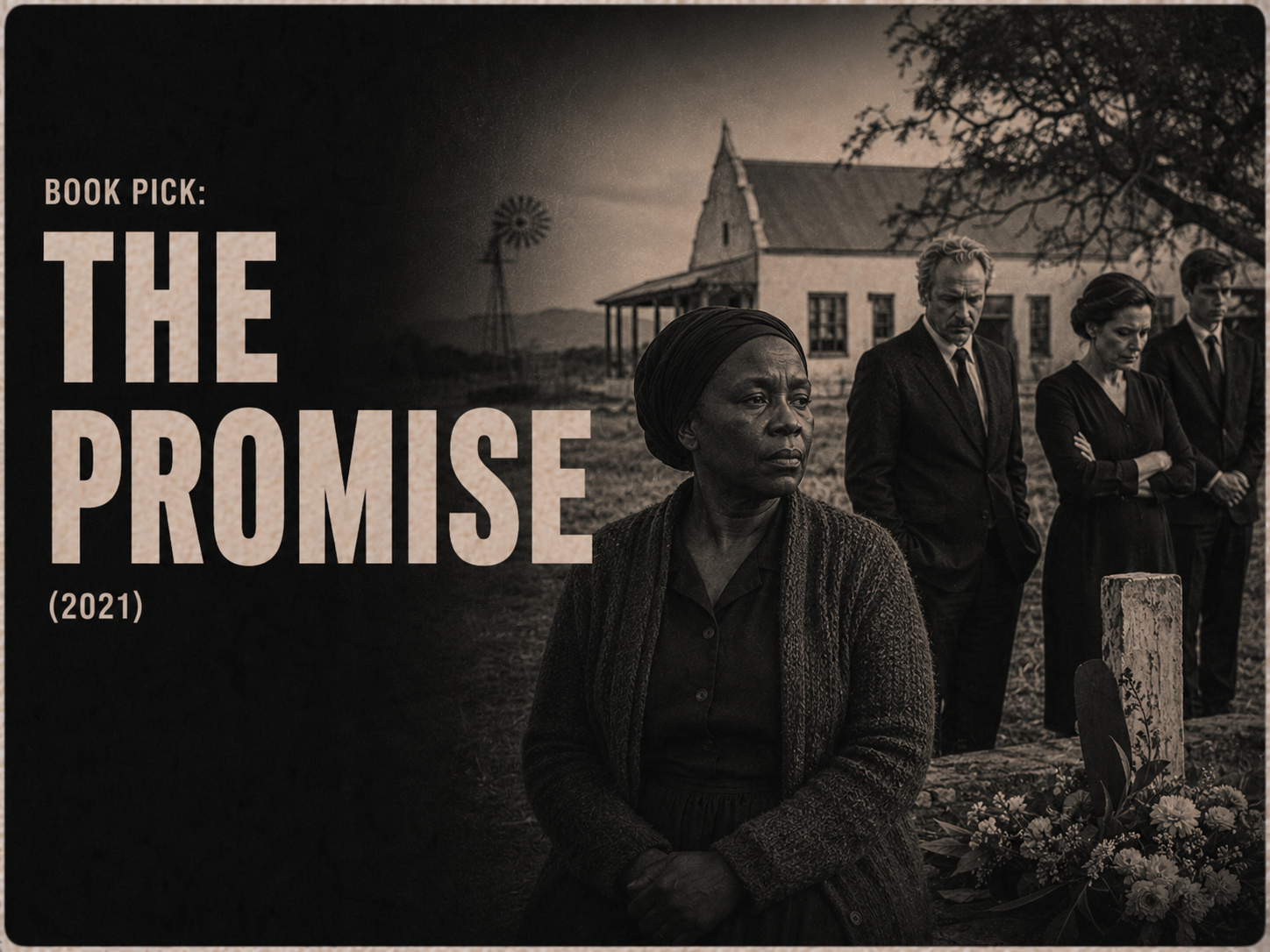
At the start of The Promise, young Amor Swart overhears her dying mother ask her father to give Salome the house she lives in. Salome has worked for the family for years. Amor’s father agrees.
Then the funeral ends, ordinary life resumes, and the family discovers how convenient it is to treat a spoken promise as unfinished paperwork.
The novel follows the Swarts through four funerals across several decades. Their farm sits outside Pretoria. Apartheid ends, Mandela becomes president, the country changes, the children scatter and return, and Salome continues waiting for the property she was promised. The book won the 2021 Booker Prize.
Galgut’s narrator moves rapidly between people, sometimes changing perspective halfway through a paragraph. A private thought passes through one character and the narration drifts towards someone standing nearby, then follows that person for a while. The technique gives the family very little privacy. Their vanity, resentment, lust, pettiness and occasional decency are all available for inspection.
The book is also much funnier than its premise suggests. Funerals bring out the full range of family behaviour: old rivalries, religious disagreements, badly concealed relief, questions about property and relatives quietly assessing how everyone else has aged.
The failure at the centre of the novel is bureaucratic. Someone should speak to someone. Papers must be found. The timing is poor. The person who made the promise has died. Each excuse sounds temporary. Together they consume decades.
Salome raises their children, prepares their food and helps bury their dead. The family still treats her claim as optional. By keeping the injustice practical, a house, a title deed, a piece of land, Galgut prevents the Swarts from hiding inside grand speeches about South Africa. Either they give Salome what was promised or they do not.
That makes it an uncomfortable Heritage Month book in the right way. Celebration is easy when heritage means recipes, music and clothing. Property requires names, dates and ownership records.
When to read: over several evenings. The narration moves quickly, and rushing it makes the family easier to tolerate than they should be.
Closing
These three families handle inheritance differently.
Michael Corleone accepts a role he once believed belonged to other men and becomes frighteningly effective at it. Stevie Wonder gathers his daughter, his childhood, his musical heroes and his politics into one record, giving each of them credit. The Swarts preserve the farm while passing responsibility for Salome from one relative to the next.
Heritage Month usually asks what we are proud of. It is also worth checking the family fine print. Which stories are accurate? Who never gets mentioned? Which traditions are loved, and which ones are simply old?
Ask an older relative how one family tradition actually started. The answer may be noble. It may involve a shortage, a stubborn grandparent or someone substituting the wrong ingredient and refusing to admit it.
Either way, save it somewhere.
See you in October.