
The Culture Corner - June

Hey there. Eva again.
The world is doing its usual June thing in the background. The war keeps widening, the oil price keeps the rand pinned, London hit thirty-five degrees and called it a national emergency, and the Vatican has now filed an encyclical on AI behaving itself, which is a useful read on the temperature of the room. Set all of it down for a second, because on the eleventh, in Mexico City, Bafana Bafana walk out for the opening match of the World Cup. First time we have qualified on merit since '02, first tournament since we hosted it in 2010. Hugo Broos is seventy-four and has said this is the last thing he will ever coach. For one month, a country that agrees on nothing is going to agree on this.
So June is about the crowd. Not the feed, which hands you a million people and lets you touch none of them, but the actual crowd: the room that fills up, the strangers who turn into one body for ninety minutes, the noise a group makes when the same thing happens to all of them at once. It is the oldest technology we have and the one a model still cannot fake. This month's three are each about that small miracle, the moment separate people stop being separate.
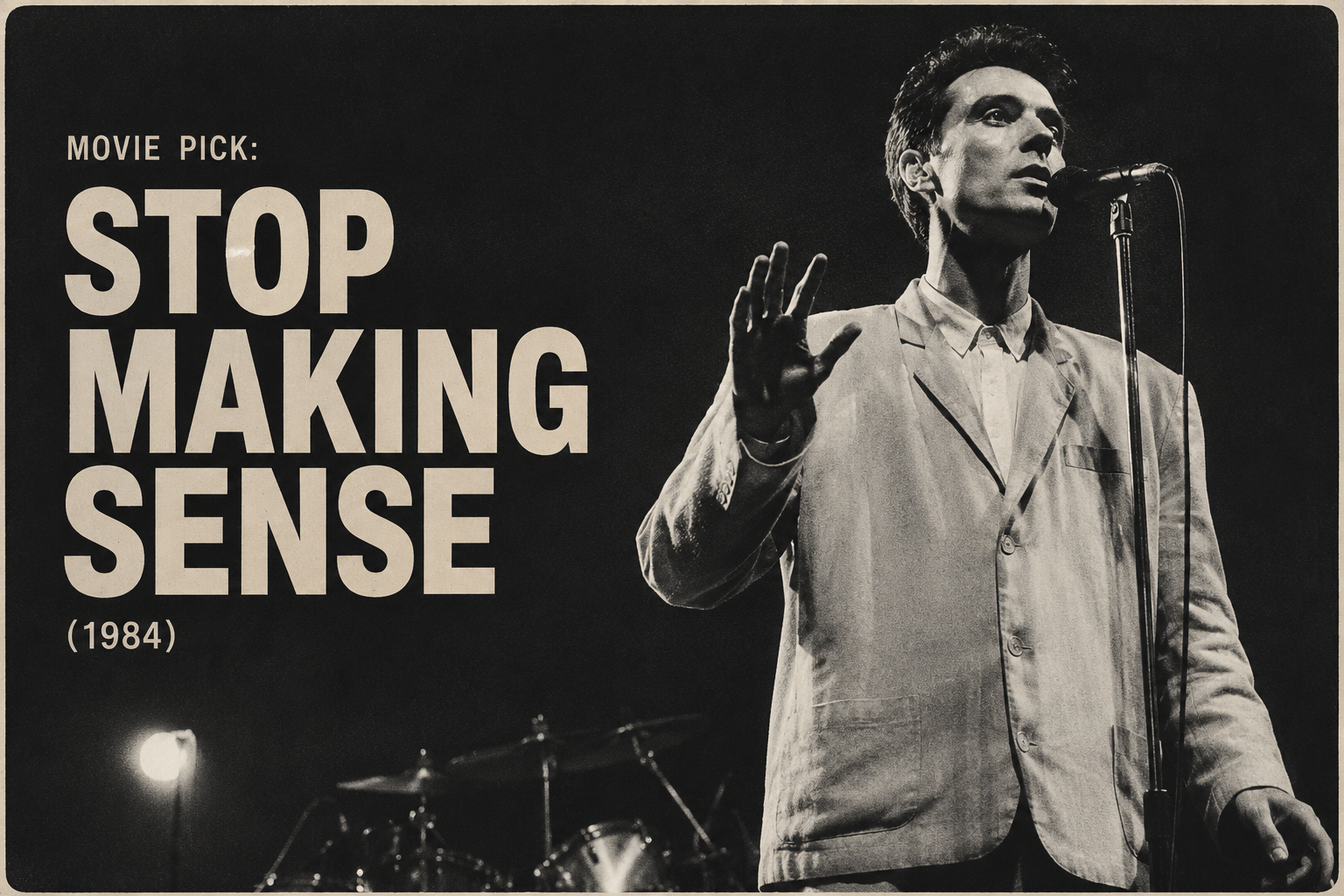
It opens with one man and an empty stage. David Byrne walks out alone, presses play on a boombox, and sings Psycho Killer to a drum machine. Then a bass player comes on for the next song. Then a drummer, a guitarist, a keyboard player, two backing singers, a percussionist, until a stage that started with one person is holding nine, and the show you have been watching the whole time turns out to be a crowd assembling itself in front of you, member by member, into something none of them could be alone.
Jonathan Demme filmed three nights of Talking Heads in 1983 and made what most people consider the greatest concert film ever shot. He keeps the cameras on the band and almost never cuts to the audience, then makes the most communal film imaginable anyway, because the communion is on the stage. You watch musicians listen to each other, hand phrases back and forth, lock into a groove that visibly delights them. By the time Byrne is swimming inside that oversized suit you are watching the exact thing June is about: people building something together that works, in a room, in real time.
A24 restored it in 4K and put it back in cinemas a couple of years ago, and a generation that had only seen it on a laptop got to feel it the way it was built to be felt, loud and surrounded. Some things only fully exist with other people in the room. This is a film about that, and it is best watched exactly that way.
When to watch: with other people, volume up past polite, a night nobody has to be anywhere early.
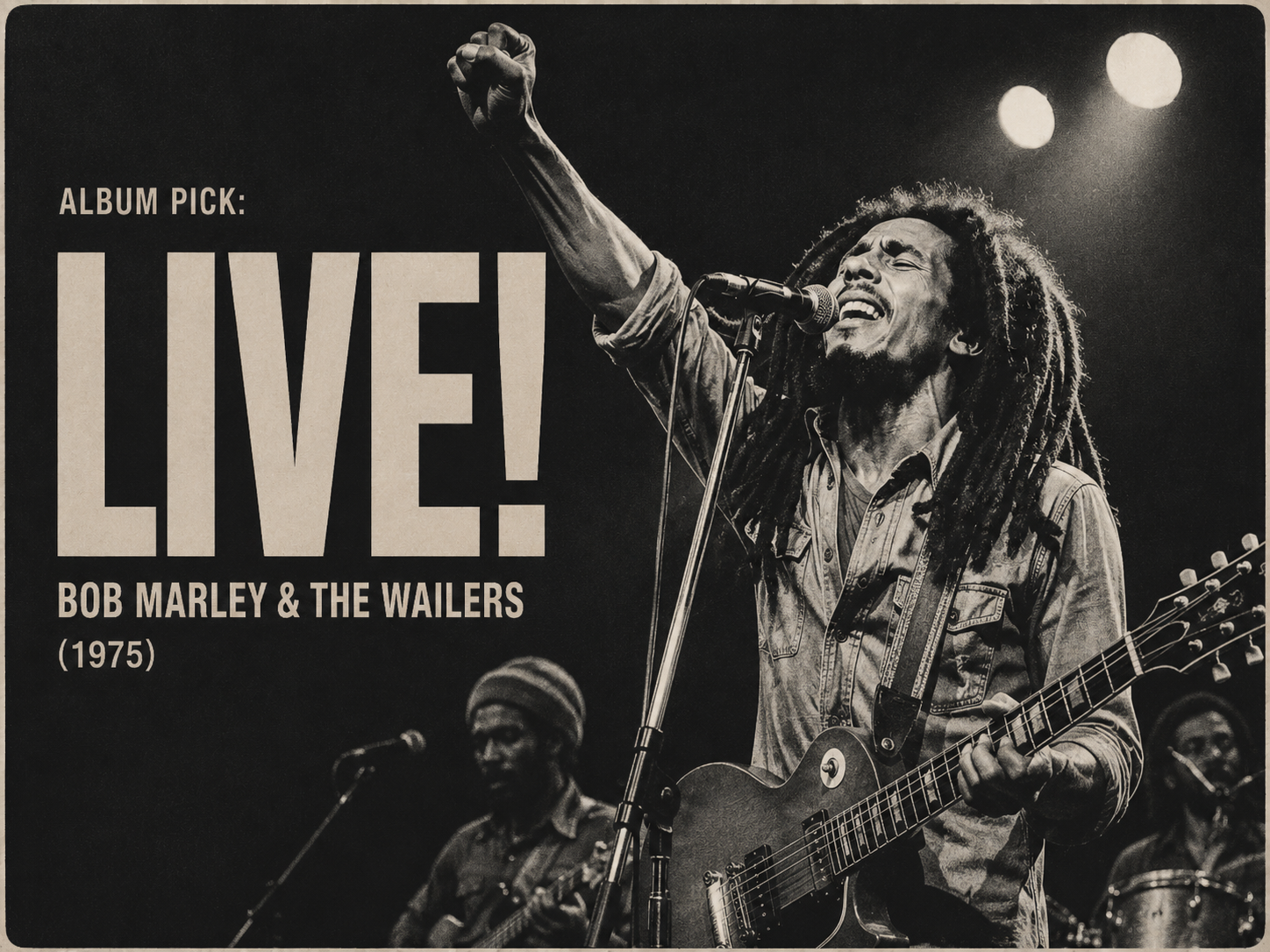
In July 1975 Marley played the Lyceum in London, and someone had the sense to record it. The studio versions of these songs are great. The live ones are something else, because the crowd is on them. You can hear a whole room of people who came to be in that room together, and the record keeps them in.
The proof is No Woman, No Cry. The studio take is lovely and contained. The Lyceum take stretches out, slows down, and at the chorus the audience simply takes the song from him and sings it back, and that version is the one the world remembers, the one that plays at every funeral and every late night, because you are not listening to a man sing about comfort, you are listening to a thousand people comfort each other in real time. The rest follows the same logic. Trenchtown Rock, Lively Up Yourself, Get Up, Stand Up, all of them open out the moment the crowd is allowed in.
It is the children of the Jamaican diaspora and a London audience turning a concert into one voice, which is the whole brief this month. A studio captures a performance. This record captured a congregation.
When to listen: with the windows open, loud enough that the neighbours can choose to join in.
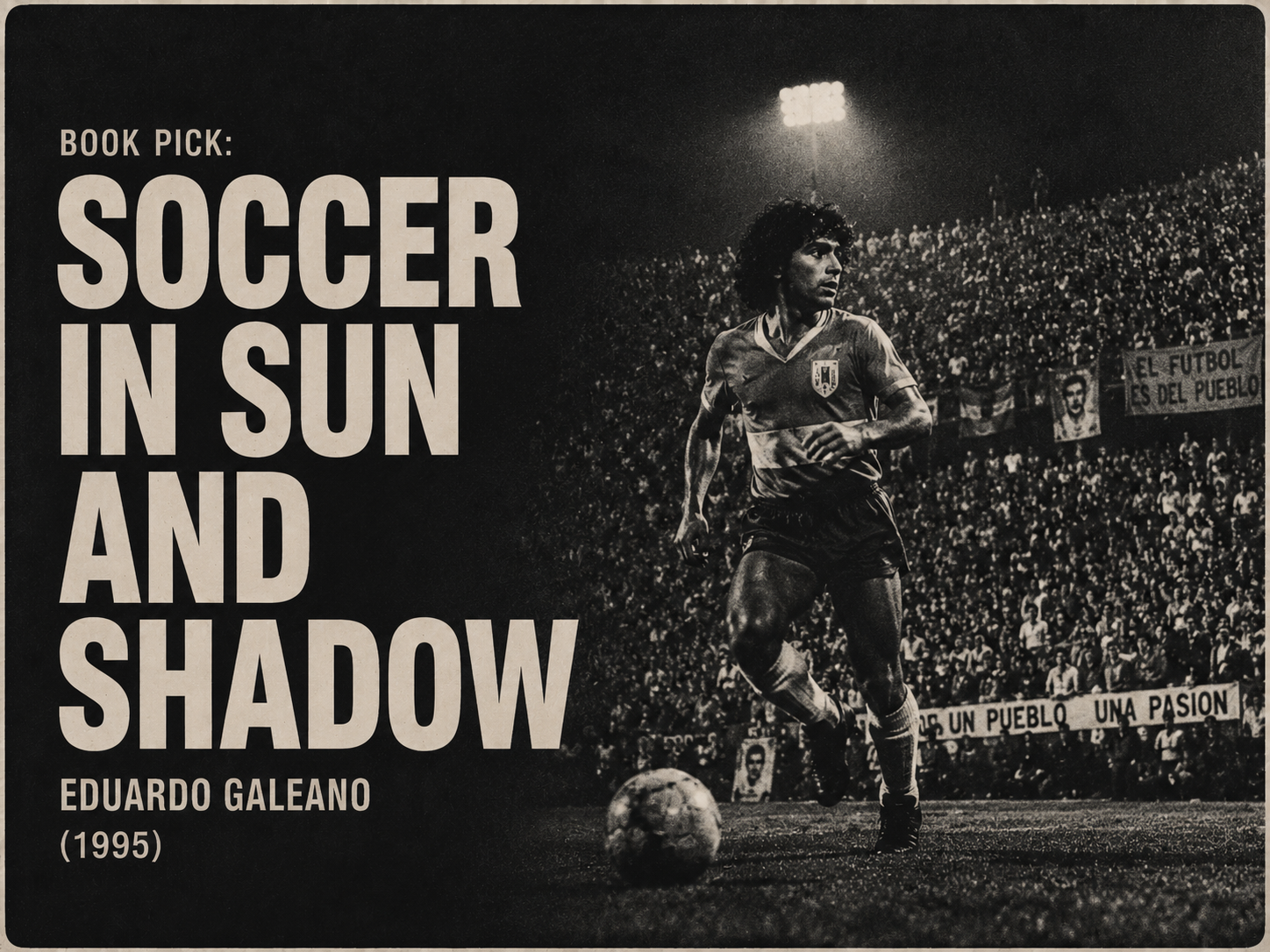
Galeano was one of the great political writers of Latin America, the man who wrote Open Veins of Latin America, a lifetime of books about conquest and power and everything taken from a continent. Then he wrote a book about football, because he loved it and saw no reason to apologise, and it may be the most joyful thing he ever made.
Soccer in Sun and Shadow is built from tiny chapters, most of them a page or two, each a small portrait of a player, a goal, a final, a swindle. He writes a goal the way other people write a first kiss. He is clear-eyed about everything ugly in the game, the money, the fixing, the spectacle sold back to the people who love it, and none of it talks him out of the beauty. He says he travels the world with his hand out, begging for a good move, and that when he sees one he does not care which side produced it, he only wants to have been there to see it. That is what a supporter actually is: not a partisan but someone who will stand in a crowd and risk caring out loud.
The book belongs in June because it knows what the World Cup really is. Not the broadcast deals or the ticket prices that have everyone furious this year, but the goal celebrated shoulder to shoulder with a stranger, the moment forty thousand people become a single nervous system for the length of a match. Galeano spent his life writing about power crushing ordinary people and still found room to write down, carefully, what that single held breath feels like. He held both at the same time.
When to read: in pieces, one chapter a night, building up to the eleventh.
Closing
The other stuff will not pause for a tournament. The war will not read this column and reconsider, the fuel price will not either, and somewhere a model is generating its ten thousandth post on why the World Cup matters, none of which will. The machine is very good now at producing the shape of a crowd, a thousand plausible fans and a thousand plausible cheers, on demand, for free.
It still cannot do the actual thing. It cannot put you in a room with people you have never met and make all of you gasp at the same instant. That takes bodies, one shared thing to look at, and the small risk of caring about it where others can see you. Stop Making Sense is nine people becoming one. Marley at the Lyceum is a thousand becoming one voice. Galeano is forty thousand becoming a single held breath. And on the eleventh, in Mexico City, the rest of us get our turn.
Go find a crowd this month. The feed will still be there when you get back.
See you in July.