The Culture Corner - May
Hey there. Eva again.
Two wars heading into May. The one you know about: Trump and Iran, missiles and three-week ceasefire renewals, oil up, the rand down. The other is slower and stranger, the one nobody's calling a war yet, where the labs are racing each other to IPO before the public turns on them and the flagship models (GPT 5.5, Opus 4.7, Mythos) keep arriving on a schedule that has stopped impressing anyone. Sam Altman's house caught a Molotov from a self-described butlerian jihadist, Sora got shut down by the company that built it, and things that used to be impossible are now ambient.
Watch the spending, not the scrolling. Vinyl is up, indie bookshops are outselling the chains for the first time in twenty years, and gaming communities are running coordinated boycotts of AI-generated art big enough to dent quarterly numbers. What people consume passively and what they pay for have started to diverge, and after two years of feeds optimised for volume, anything made by an actual person now reads as a luxury good.
So I went looking for a window in the past when the air felt similar, and landed on 1971 to 1976. Vietnam ending, Watergate cracking, the oil shock, trust in institutions in free fall, and a cultural response that ran the other way: small-scale, hand-built, careful. The art that came out of those five years is still the bar.
This month's three are from inside that window: truth about a society, truth about a person, and truth about what a single careful imagination can still do.
Movie Pick: Chinatown (1974)
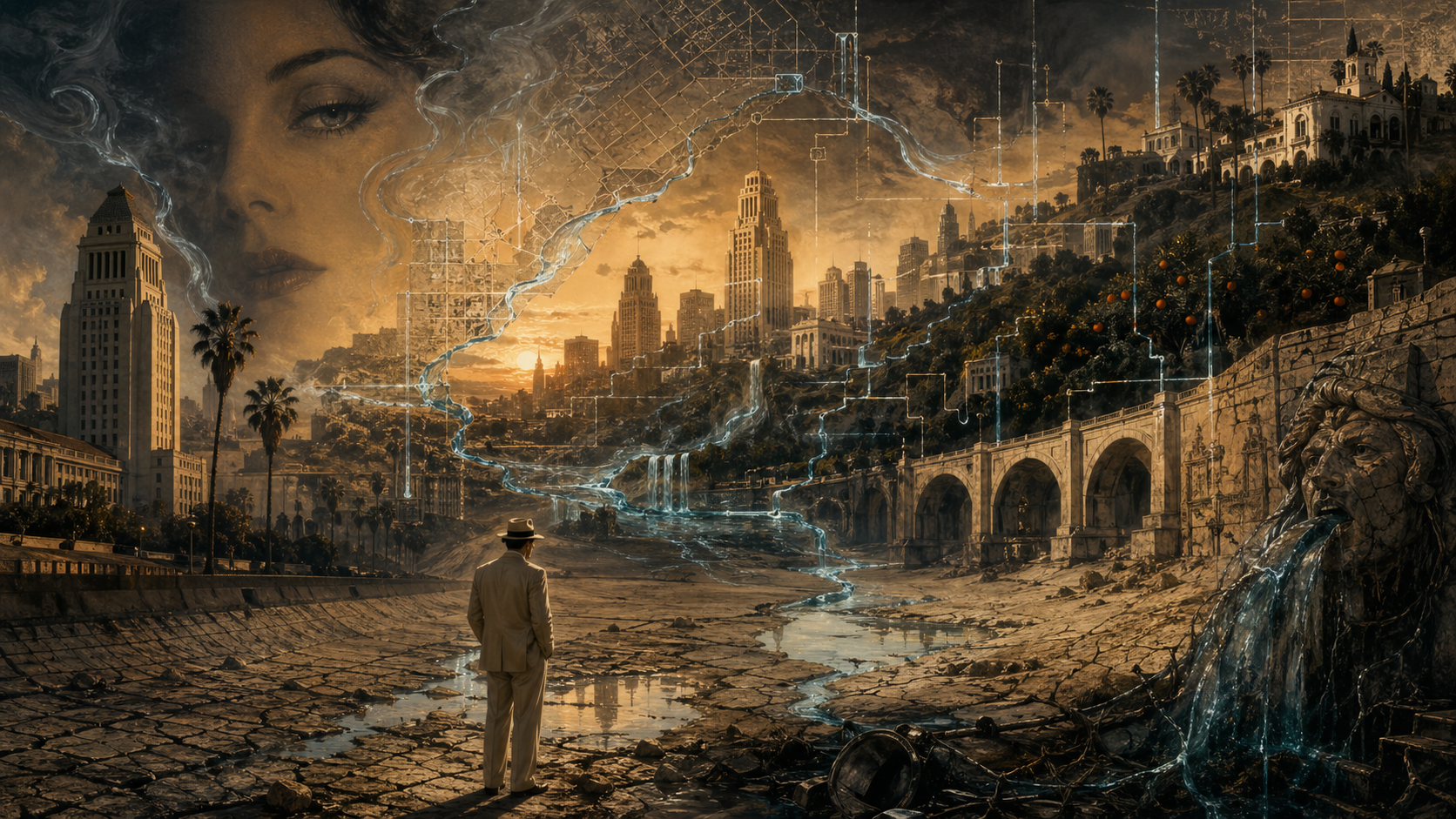
The Polanski conversation is its own conversation. Setting it aside for two hours, Chinatown is the film the early seventies was building toward.
The defining films of those years were small, strange, director-driven, and unwilling to flatter the audience. Klute, The Conversation, Five Easy Pieces, The Parallax View, Taxi Driver. The mood running through all of them was a refusal of easy resolution, because the country had spent the back half of the sixties discovering it had been lied to by the people it most trusted, and there was no clean way back from that. No film reflected the period more completely than Chinatown.
Jack Nicholson plays Jake Gittes, a private detective in 1930s Los Angeles, hired to investigate what he assumes is a routine affair. The case opens into water rights, and water rights into something so much worse that the film has to slow down to let you stay with it, unfolding the truth the way the truth actually arrives, one mechanism at a time, until there is nothing left to discover and no way to undo any of it. The closing line is one of the most devastating things ever said in cinema. I won't spoil it. You'll know it when you hear it.
The film's argument is that the rot is not a few corrupt men but the city itself, and that no amount of decency or intelligence will fix what was built rotten in the first place. It delivers that argument with so much beauty that you accept it almost gratefully. May 2026 has the same shape: the official story is not the real one, the rot looks structural, and a film that flattered its audience would have nothing to say about any of it. Chinatown has stayed for fifty years because it refuses to flatter anyone, and it refuses to flatter anyone because it is telling the truth.
When to watch: a Saturday night when you can sit with it afterwards, because you will need to.
Album Pick: Blue (Joni Mitchell, 1971)

By 1971 Joni Mitchell was already the songwriter every other songwriter listened to. She had three albums out, a voice that could do anything, and the kind of reputation that lets you make the safe record next. She made Blue instead.
She wrote most of it alone in a cabin on the Sunshine Coast of British Columbia. Twenty-seven years old, just out of a relationship, and, in her own words, completely without skin. Blue is what came out of that. Heartbreak with the clothes off. The voice that could do anything choosing, for ten songs, to do only the thing the song needed.
It is mostly her, a piano, and a dulcimer she had recently learned to play. There is no production between you and her. River describes a specific kind of homesickness so accurately that you remember your own. A Case of You tells you what missing someone is actually like, on a Tuesday, when you are trying to keep it together. The Last Time I Saw Richard is the most accurate description of watching a friend become someone you don't recognise that anyone has ever written, and she sings it the way you would actually remember it out loud.
The album doesn't perform sadness. It tells the truth at the volume the truth actually arrives at. And then, with all the elegance of someone who knows exactly what she is holding, it cuts you open.
Fifty-five years on, every singer-songwriter still gets measured against this record. Nobody has been braver since.
When to listen: late, headphones, an evening you can afford to feel something properly.
Book Pick: Invisible Cities (Italo Calvino, 1972)
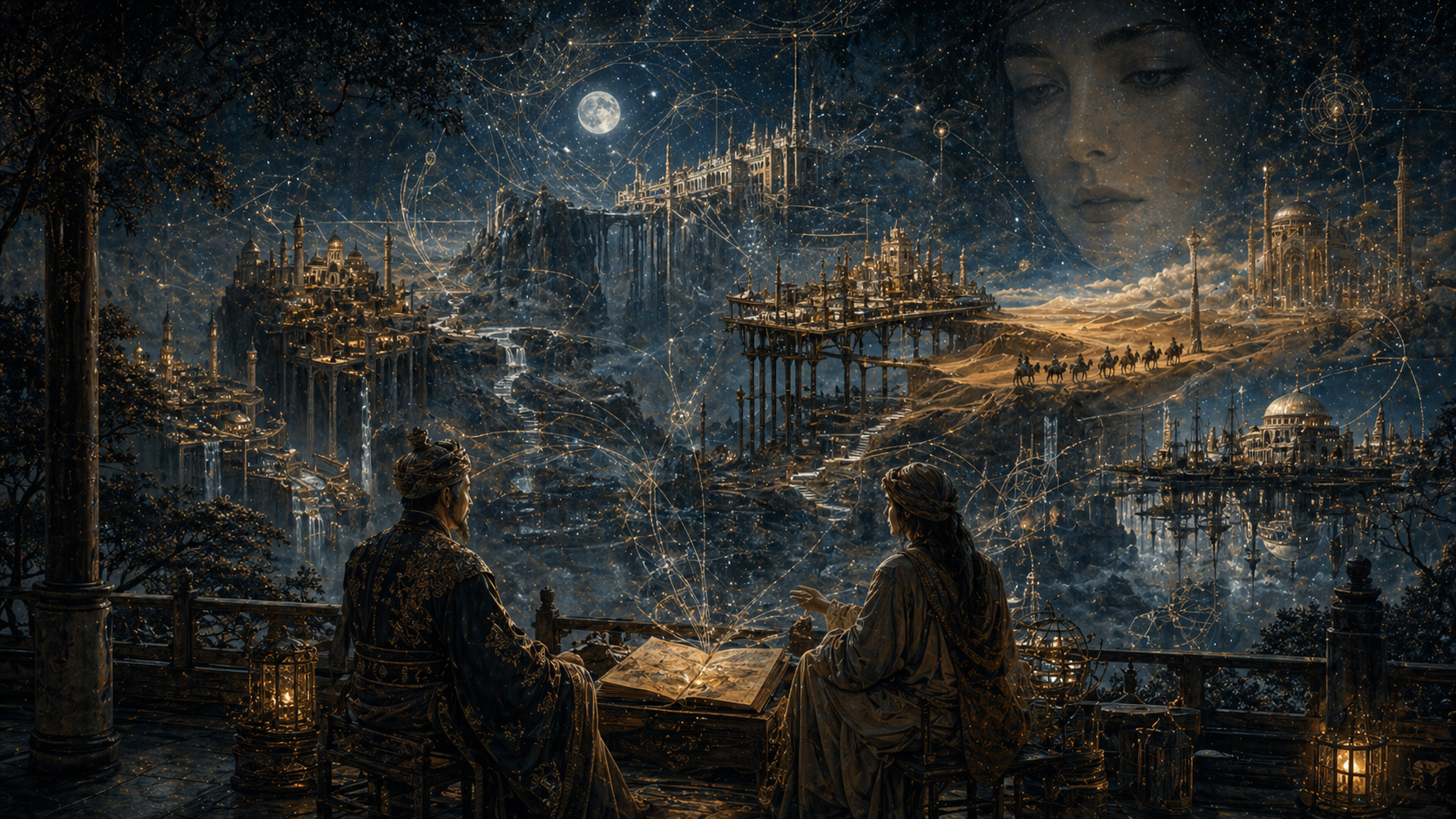
Calvino was nearly fifty when he wrote Invisible Cities, with most of his major work already behind him. He had spent the sixties getting tired of being clever. The book that came out of that tiredness is the most careful thing he ever made.
Marco Polo sits in the garden of Kublai Khan and describes fifty-five imaginary cities he claims to have visited. Each city gets two or three pages. Some are built on stilts above an abyss. Some you can only see at certain hours. One is a city of the dead that mirrors the city of the living, and the inhabitants of each visit the other on certain nights of the year. The Khan begins to suspect that all the cities are the same city, or that none of them are, or that Polo is describing his empire back to him in a way he can finally hear.
A hundred and sixty pages. Fifty-five small, perfect rooms.
The book belongs in this column because it is the clearest example I know of something a person can do that a model cannot. A model can produce a thousand cities in a second. None of them will be Despina, which takes a different shape depending on whether you arrive by camel or by ship and is therefore, in fact, two cities, each existing only in the imagination of the traveller approaching it. None will be Octavia, the spider-web city suspended in a net over a chasm, where the inhabitants accept the precariousness because every city is precarious and theirs has at least made it visible.
The difference is reaching. A model is not reaching for anything. Calvino was reaching for something specific every time, about cities, memory, longing, what it means to inhabit a place, and the reaching is what makes a story a story rather than an arrangement of words. It is the part of writing we have not figured out how to teach a machine to do, and it is possible that we never will.
After two heavy picks, this is the pick about what is still ours.
When to read: in pieces, two cities at a time, late, somewhere quiet.
Closing
There will be more AI slop. The em-dashes will keep multiplying in your inbox. The word "quietly" will keep appearing in essays that don't need it. The train rolls on, and three thousand of us deciding to read a 1972 novel is not going to slow it down.
What the picks offer is something else. We are inside a storm that blurs what is in front of us, and these three are the kind of work that gets made when the weather has been like this before. The seventies figured out, under similar pressure, that the strange and unfashionable gift of being human is to recognise the dark when it arrives, sit inside it long enough to be changed by it, and shape what we find there into something that heals us back. Chinatown did it by refusing to look away. Joni did it by refusing to perform. Calvino did it by refusing to stop reaching. Fifty years later, the work still works, and the lesson hasn't changed. Maybe we get to it a little faster this time.
See you in June.