Part 7: The day Prometheus gave us ChatGPT
Part 7 of an ongoing series on Modern AI History.
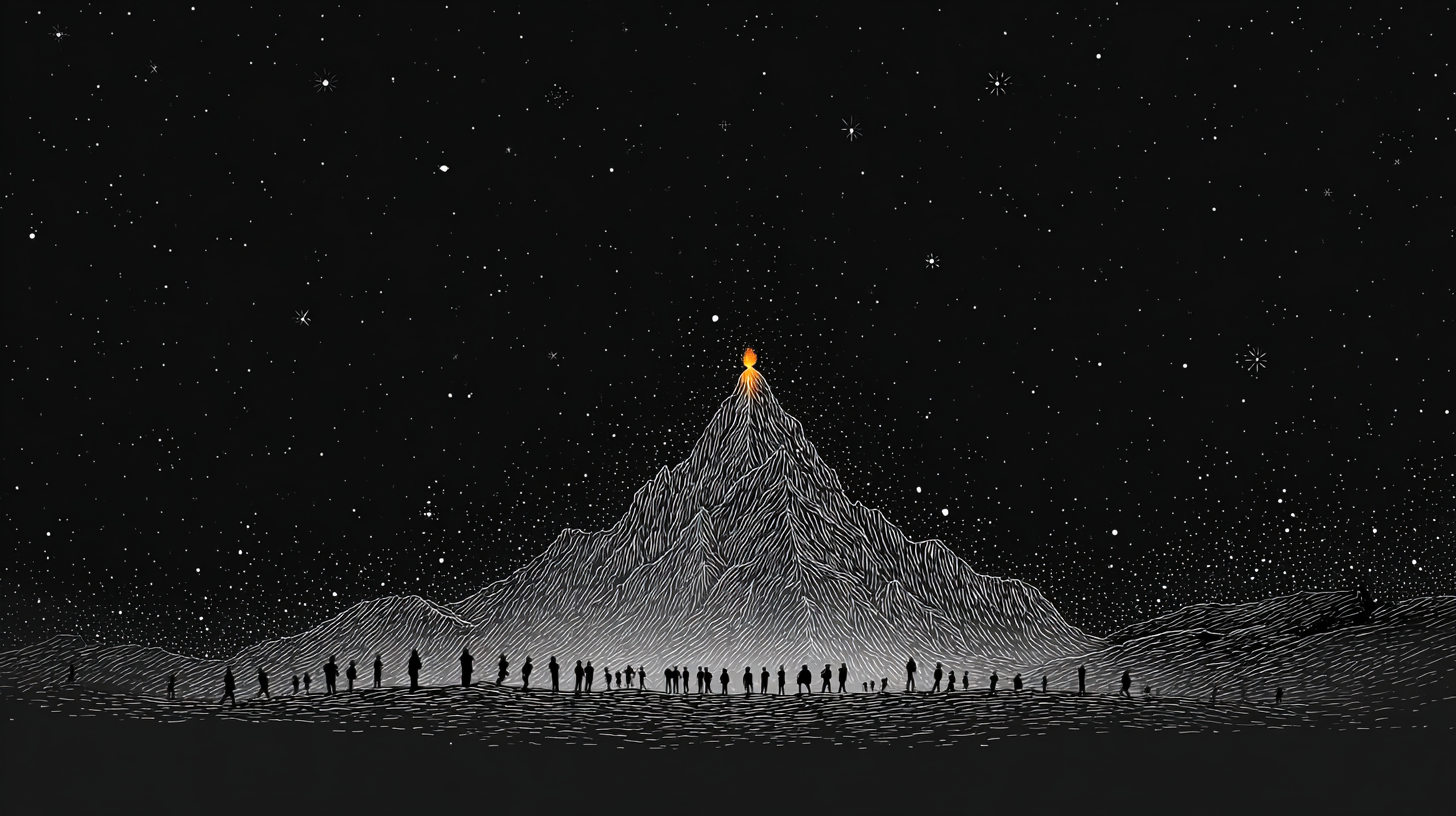
The Fire in the Mountain
What we've really been trying to emphasise in the story so far is that AI didn't drop out of the sky. It feels that way now — there was a Tuesday in November 2022 when most people heard the word for the first time, and the Wednesday after, when their group chats had already moved on to arguing about it. But the ember that lit that fire had been carried down the mountain over forty years. A professor in Toronto who refused to give up on a losing idea. A chip designer who bet on a market that didn't exist for nearly a decade. A dinner at a hotel off Sand Hill Road. A paper with eight authors and a strange title. A fall-out at a birthday party. None of it was inevitable, and all of it happened before the rest of us were paying attention.
The second thing worth emphasising, and the thing this chapter is really about, is that by the summer of 2022 almost every company we've written about had arrived at roughly the same place. OpenAI wasn't alone on the mountain. Google had it. DeepMind had it. Anthropic had it. Meta had a version of it. There was something close to a pact among them — not a written one, nobody signed anything, but a shared, uneasy agreement that this particular technology was not ready for the public, and the public was not ready for it. The models hallucinated. They could be talked into saying almost anything. Better, everyone seemed to agree, to keep the fire on Olympus a little longer.
Catching up with old friends
The rest of Google was stuck in a different kind of paralysis. They had LaMDA, a conversational model so fluent that in June 2022 one of their own engineers, Blake Lemoine, went to the Washington Post claiming it was sentient and that he'd tried to hire it a lawyer. Google fired him, which was the easy part. The harder part was the thing the story accidentally revealed — Google had a system that could convince its own engineers it had a soul, and the public had no access to it. The company had spent twenty years being the place that gave you the right answer, and a model that confidently hallucinates citations was not a product they knew how to put their name on. Noam Shazeer, one of the eight authors of Attention Is All You Need, had already walked the previous year along with his colleague Daniel de Freitas, specifically because Google wouldn't ship what they'd built. They founded Character.AI to do it themselves. By mid-2022, of the eight authors of the Transformer paper, almost none were still at Google.
Anthropic, as we left them, had trained Claude and chosen not to release it — and the autumn of 2022 didn't make the decision look smarter. Dario and the team spent the back half of the year developing Constitutional AI, an elegant idea where rather than relying entirely on human raters, you wrote down a set of principles and trained the model to critique its own outputs against them. The paper would land in December. By the time it did, the race they'd left OpenAI to avoid was already underway without them. There was a second complication too: of the $700 million Anthropic had raised, $500 million had come from Sam Bankman-Fried's FTX, which collapsed in November into one of the largest frauds in financial history. The money was already in the bank, but the cap table — and the question of what happens when a bankruptcy estate owns a stake in a frontier AI lab — would take years to sort out.
Jensen Huang, meanwhile, was having a terrible year. Nvidia's stock had peaked in November 2021 at around $340 and by October 2022 was trading below $120. Crypto had collapsed, which mattered because GPU demand had been propped up by Ethereum miners. The gaming market was soft. In a single quarter Nvidia took a $1.2 billion inventory write-down on unsold chips, and Wall Street, which had mocked Jensen for CUDA in 2016, was mocking him again for overproducing. The AI labs were buying Nvidia chips — that part had been true since AlexNet in 2012 — but AI was still a line item, not the business. The H100, the chip that would define the next three years, had been announced in March and was only just beginning to ship. Most of the world had never heard of it. Thirty days after ChatGPT's release, the order book started to get strange. Two years after that, Nvidia was worth more than Apple.
The Meta mistake
Meta was the odd one out. Yann LeCun, their Chief AI Scientist and one of the three Turing Award winners alongside Hinton, had spent years arguing that large language models were a dead end — real intelligence, he insisted, would come from models that understood the physical world, not ones that predicted the next word. In mid-November 2022 Meta released Galactica, a language model trained on scientific papers and pitched as a tool for researchers. It invented citations with such fluency that working scientists found themselves quoted in papers they'd never written. It confidently explained the benefits of eating crushed glass. Meta pulled it in three days, and every safety team at every other lab took the wrong lesson from it — see, this is why we don't ship. OpenAI, two weeks later, shipped anyway.
None of this was coordinated. There was no meeting, no treaty, no agreement. What there was, held across every serious lab, was a shared belief that the responsible thing to do was wait. The pact held right up until the moment one of them broke it, and then it turned out there had never been a pact at all. Just a set of individual decisions that happened to rhyme, until one of them didn't.

The last week of November 2022 had three events that, looked at together, mark the end of one era and the start of the next. On November 11, FTX collapsed. On November 15, Galactica launched and failed. On November 30, a small team at OpenAI — working on what was internally treated as a minor research preview, a polished wrapper around a model they already considered old — flipped a switch on a product they expected a few thousand people to try.
Prometheus had come down off the mountain.
Why they shipped
The official story, the one Altman told in interviews for the next year, was that ChatGPT was a research preview. A low-stakes release. They wanted feedback and had no idea it would blow up. Every version of this story is true and none of them are the whole answer.
The real answer is that OpenAI in late 2022 was running out of time in three directions at once, and shipping was the only move that solved any of them. Anthropic was training a competitor and would eventually have to release it, at which point the narrative wrote itself — the careful ex-OpenAI people ship a safer version of OpenAI's idea. Google could ship LaMDA any week they chose to, and if they ever did, their distribution would make an OpenAI chatbot irrelevant within a quarter. And Microsoft's billion dollars, taken three years earlier on the argument that scaling would be expensive, had turned out to be correct in ways that now required a consumer product to pay for the next training run. Moving first was the only play that addressed any of it.
What tipped the decision was smaller. Through the back half of 2022, OpenAI had been letting select users interact with GPT-3.5 through an internal chat interface, and people didn't use it the way they used the API. They used it like a person — asked follow-up questions, argued with it, asked it to rewrite things in a different tone. The interface, not the model, was doing something the team hadn't expected.
The team building it wasn't the A-team either. GPT-4 was the A-team project, locked down and months from release. The chat interface was a side effort — John Schulman's group building what they thought of as a demo. When they pitched shipping it publicly in mid-November, the internal debate was real but short. Ilya Sutskever, by most accounts, was uneasy. Altman's argument won, and it was structural: the chat interface was the moat, not the model. Whoever defined what it felt like to talk to an AI would own the category.
They gave it a placeholder name — Chat with GPT-3.5 — and shortened it because the placeholder was ugly. ChatGPT was not supposed to be a brand. It was supposed to be a URL. Internal projections were modest: a few tens of thousands of users in the first week, maybe a hundred thousand by month-end. Greg Brockman later said the team had a private bet on first-week signups, and the highest guess in the building was an order of magnitude below what actually happened.
The fire catches
What happened next has no good comparison in the history of technology. ChatGPT hit a million users in five days. Facebook had taken ten months. Instagram had taken two and a half. By the end of January it had a hundred million — the fastest adoption of any consumer product ever measured, and it wasn't close. TikTok, the previous record holder, had taken nine months to do what ChatGPT did in two.
The thing that made it spread wasn't the benchmark scores. It was the shareability. Someone would type a prompt, screenshot the answer, and post it — a sonnet about their cat in the voice of Shakespeare, a working Python script for a problem they'd been stuck on, a breakup text rewritten three ways. Every screenshot was a recruitment ad. The product sold itself because using it, even once, produced an artefact worth showing someone else.
Inside OpenAI, the servers melted. Brockman spent the first week personally helping fight capacity issues. The modest research preview became, within days, the fastest-scaling piece of infrastructure the company had ever run. By February, Microsoft had announced a further $10 billion investment and integrated the technology into Bing. By March, every company we've written about in this piece was in crisis mode — Google declared a Code Red, Demis was pulled off his science work to help merge DeepMind with Google Brain, Anthropic accelerated Claude's public release, and Jensen Huang's phone started ringing with orders that would take two years to fulfil.
The pact was over. The fire was everywhere.
The punishment fell on the giver
This is where the Prometheus parallel gets almost eerie.
Almost exactly one year after ChatGPT's release — November 17, 2023 — Sam Altman was fired by his own board. The architect of the release, the man most publicly identified with the gift, was chained to a rock by the people closest to him. Ilya Sutskever, the Chief Scientist who had been uneasy about shipping in the first place, was one of the ones who turned the key. The stated reason was, in essence, that Altman had moved too fast and not been honest enough about it. The theft, in the board's telling, had been unsanctioned.
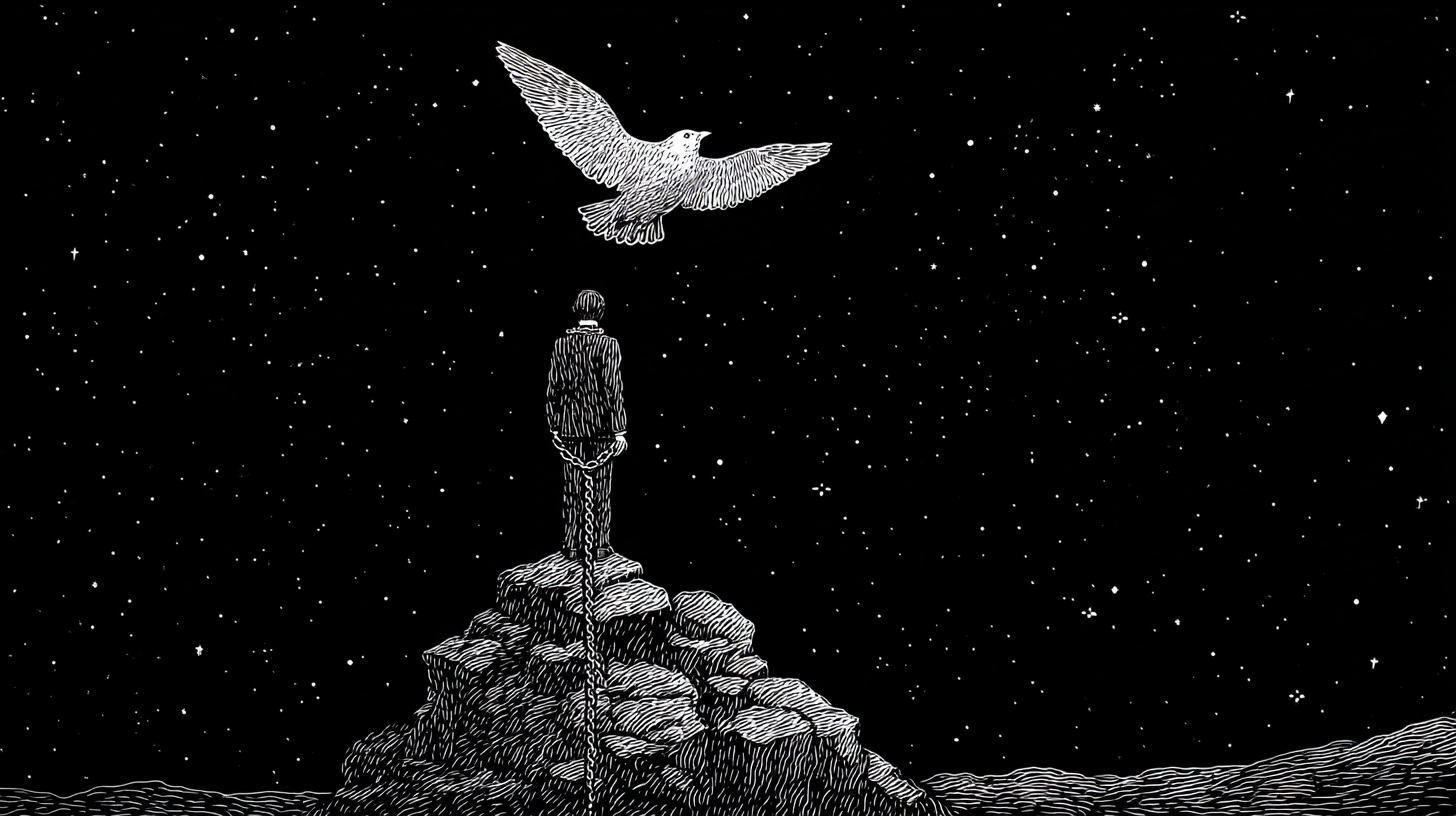
He came back five days later, but the shape of the story was set. Since then, Altman has been the most scrutinised executive in technology. Every senate hearing, every podcast, every profile returns to the same question — should you have done this, and should you be trusted with what comes next. Ilya left. Jan Leike left. Mira Murati left. The safety team that had built the thing largely scattered. The liver grows back; the eagle returns.
And the giver keeps giving. That's the other Promethean note. Prometheus, chained to the rock, does not repent — he tells Zeus, in Aeschylus's version, that he'd do it again. Altman, asked any version of the question, says some variation of the same thing.