Powerplay 2045: Why we built a game to hire people
On the night of the 19th of May, we sat making final changes to something we'd been excited about for months. As the hours ticked along, that excitement gave way to a running inventory of everything that could go wrong.

The next morning, we were due to demo PowerPlay 2045, a game we'd spent months building, to a cohort of UCT's senior computer science students. Instead of booking a hotel, we'd rented an Airbnb on the Camps Bay coastline. It was gorgeous, and we'd decked it out in SimplyfAI colours, but there was one problem: perhaps because of its location, the internet was wildly volatile and would sometimes drop for hours at a time. If that happened on the 20th, with a room full of students and a browser-based game, we'd be in serious trouble.
Twelve or so hours later, holding thumbs, we ran four games of PowerPlay 2045 simultaneously. The connection held up, the students arrived, and for ninety minutes we were greeted by the sound we'd been chasing all along: silence. A room of senior students sat completely absorbed, heads down in a strategy game that was recording how every one of them thought.
Sitting in that room, we knew we had something.
But let's take a step back. How did we get here in the first place? Why on earth did we build a game to assess graduates?
Every hire is enormous
When you're a small company, there's no hiding in a team of eight. A great hire changes the trajectory of the business, while a poor one costs you in salary, in time, and in the energy of everyone who has to carry the gap. Larger companies can absorb a hiring mistake in a way that we simply can't.
Being an AI startup makes the stakes stranger still. The people best suited to this industry right now are often the youngest in it: graduates and early-career hires who've grown up alongside these tools, who learn fast and aren't carrying habits from a world that no longer exists. We knew early on that we'd be leaning on young talent, which meant we needed a way to find the right young talent.
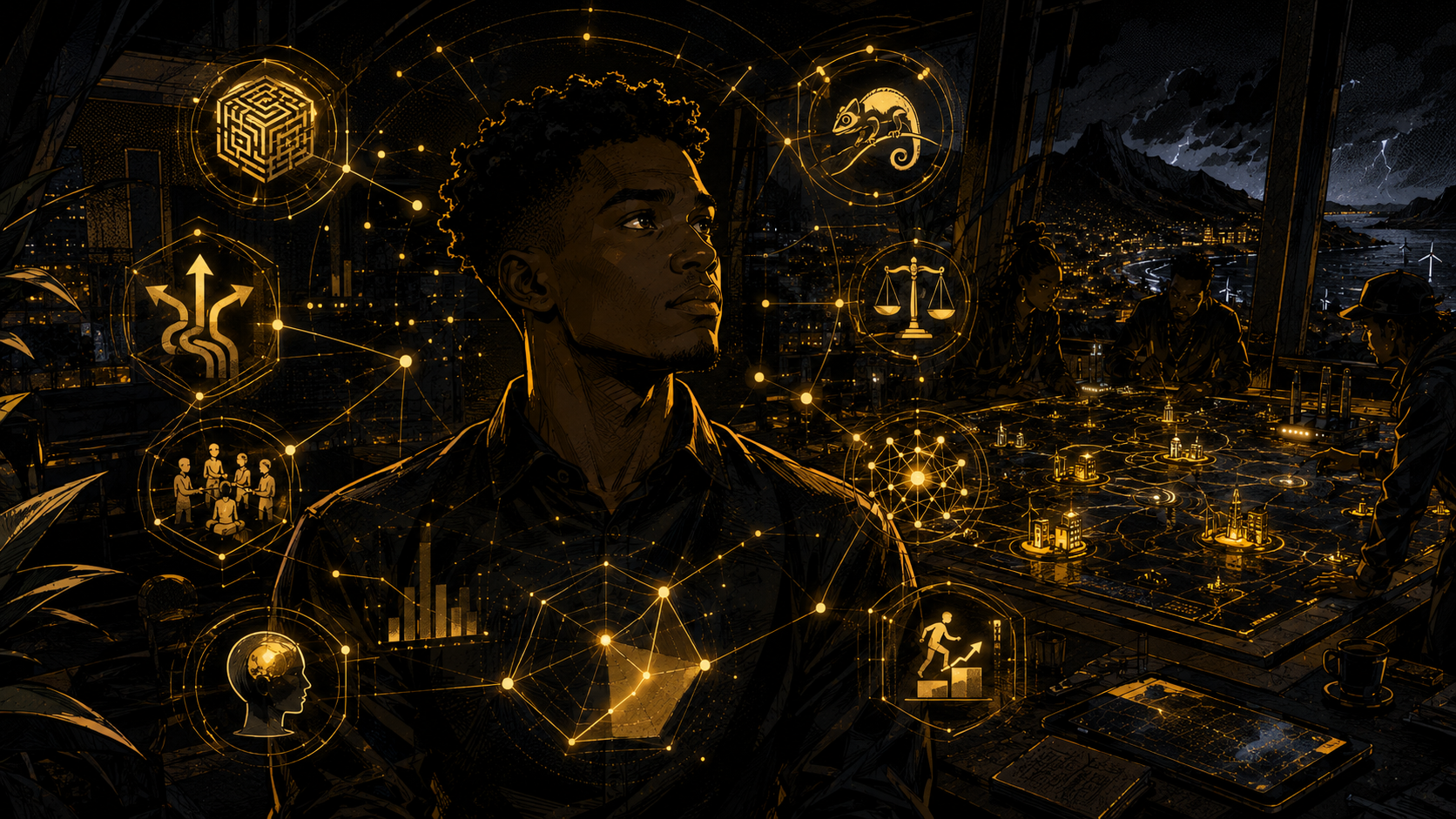
So we sat down to figure out how we'd actually do graduate recruitment, and somewhere in that conversation it dawned on us that we probably weren't alone in what we were running into.
Most hiring teams are already well equipped to assess personality. Between psychometrics, values fit, and communication style, that part of the toolkit is mature and it works.
At the same time, the pool of candidates with tertiary qualifications has exploded over the last few years. A degree used to narrow the field, and now it barely thins it. When everyone on the shortlist has the qualification, the qualification stops telling you anything.
Meanwhile, the ground is shifting under all of it. AI and the technologies around it are moving so fast that what a graduate knows today matters less than how well they can adapt, learn, and grow. We're hiring for jobs that will look different in eighteen months, so the ability to learn matters far more than book knowledge with a shelf life.
Between us, we'd also seen graduate recruitment from the inside at larger corporates, and even there, with proper budgets and established programmes, the same data points were missing. Everyone was assessing what candidates know and who candidates are, but almost nobody was assessing how candidates think.
The data we actually wanted

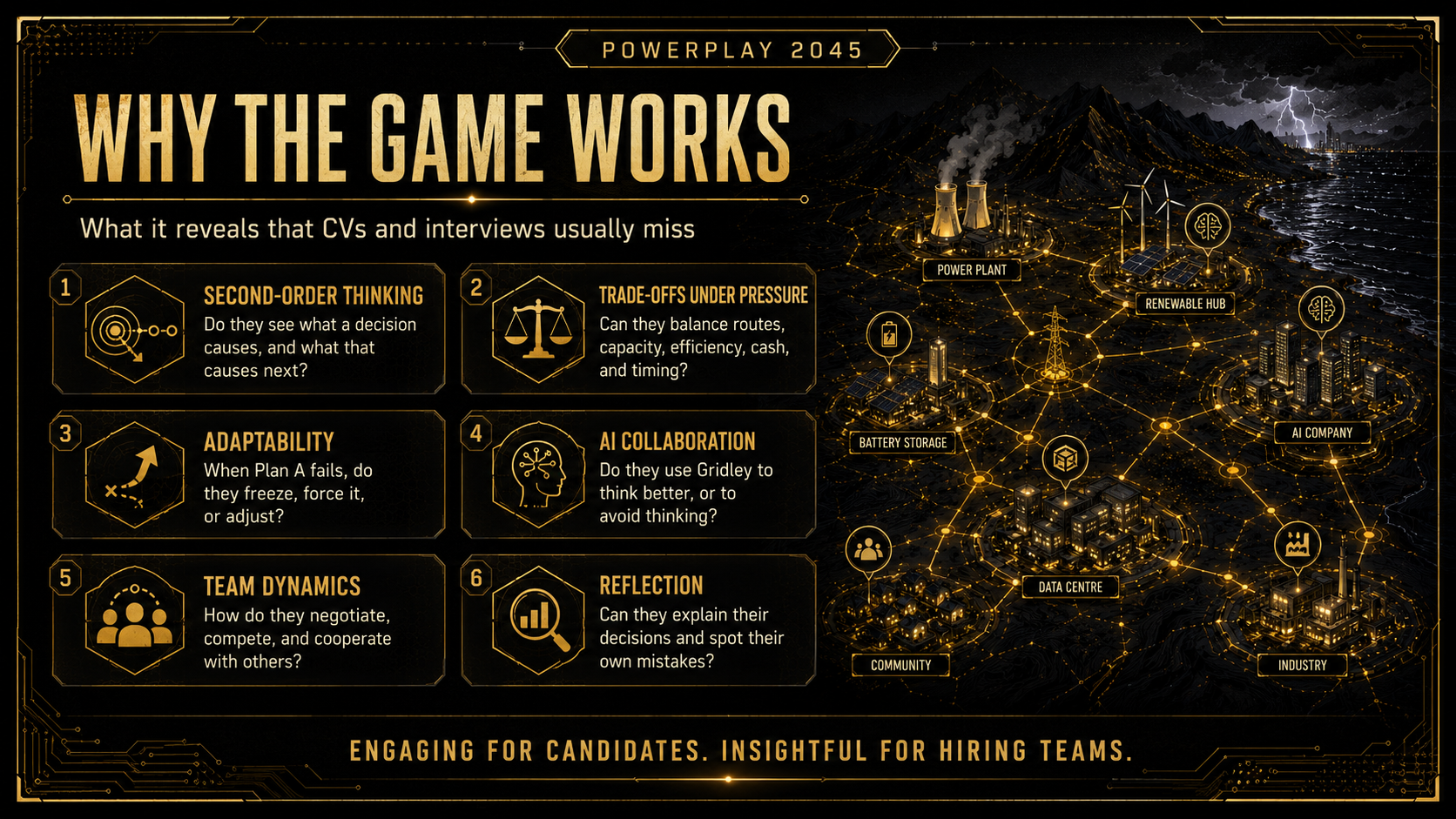
Once we framed it that way, the wishlist wrote itself. We wanted to see candidates thinking rather than reciting. Are they aware of second-order effects? Do they see what their decision causes, and what that causes in turn? How do they handle trade-offs when they can't have everything? What happens when Plan A fails: do they freeze, force it, or adapt? How do they interact with AI systems? Do they delegate well, do they sense-check the output, and do they use the tools to think faster or to avoid thinking altogether? And how do they work with their peers when everyone is under the same pressure?
Then there was the layer we came to care about most: reflection. The gameplay matters, but what might matter more is what happens afterwards. Can a candidate look back at their own decisions and pick out where they went wrong? Can they identify their own flaws without being led there? In a field moving this fast, self-awareness is the engine of growth. Someone who can honestly assess their own performance will keep improving for the rest of their career, while someone who can't will plateau no matter how bright they are.
None of that shows up on a CV, and very little of it survives an interview, where candidates are nervous, rehearsed, and performing the version of themselves they think we want. Ask someone how they handle trade-offs and you get a prepared answer. Put them in front of an actual trade-off and you get the truth.
So we built a game

Here's where our own obsessions became useful. We are big board game fans, and we've always felt that the mechanics of modern strategy games give remarkable insight into a player's thought process. Just as importantly, they create a compelling canvas. A good game keeps a person genuinely interested while you evaluate them, and that is precisely what separates this approach from interviews and the usual assessment techniques. Nobody has ever been absorbed by a competency questionnaire.
Two mechanics in particular do the heavy lifting. Engine building is the art of making early investments that compound: you spend now on capabilities that generate more value every turn afterwards, so the player who thinks two or three moves ahead pulls away from the player who only optimises the current turn. Resource management is the discipline of working with scarcity, where money, time, and actions are always limited and spending on one thing means going without another. Together, these mechanics create complex scenarios that demand thoughtful decisions, while still delivering the satisfaction of watching your plans come together. They put second-order thinking and trade-offs, the exact things we wanted to measure, at the heart of the experience rather than bolting them on.
Welcome to 2045
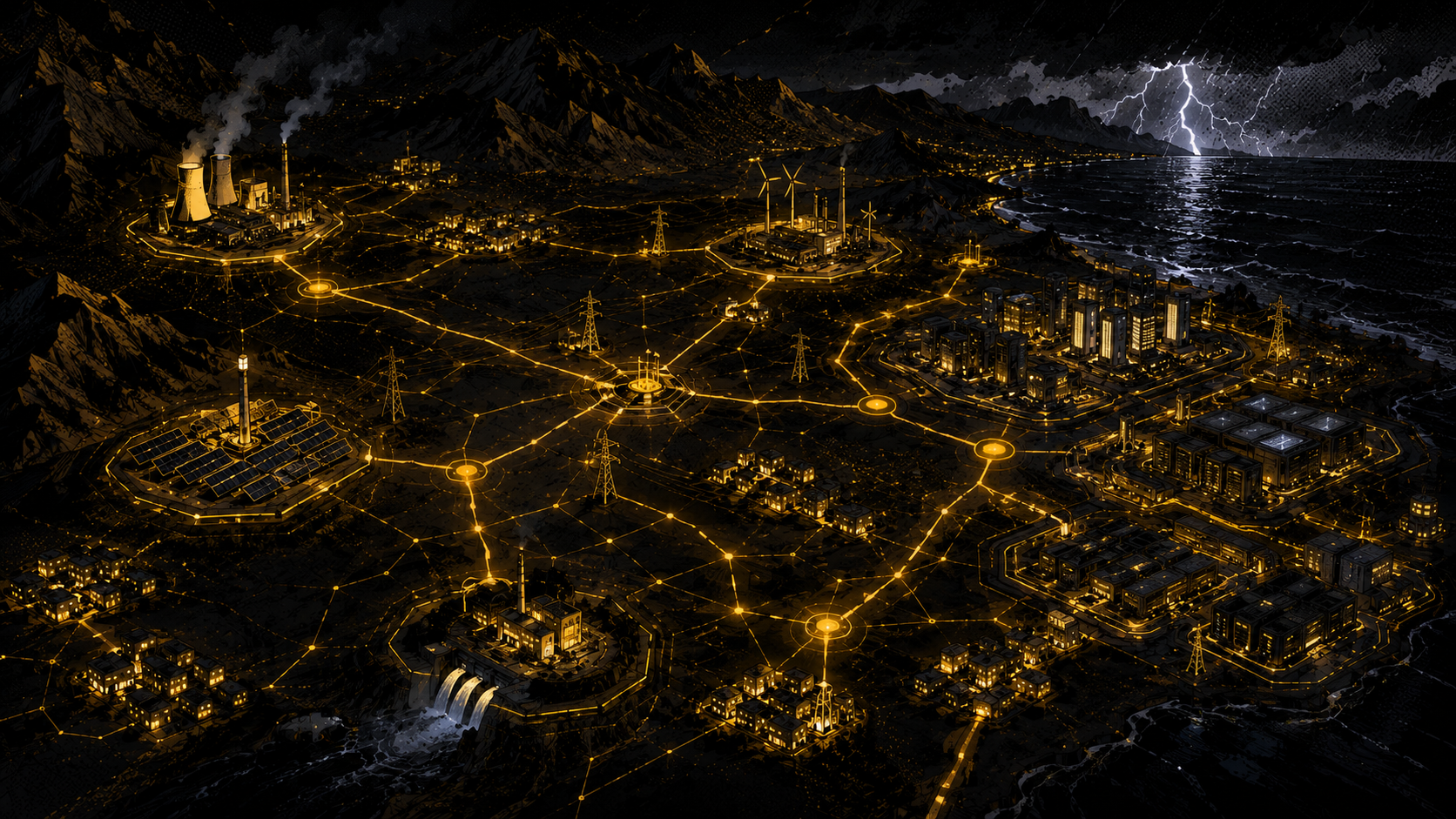
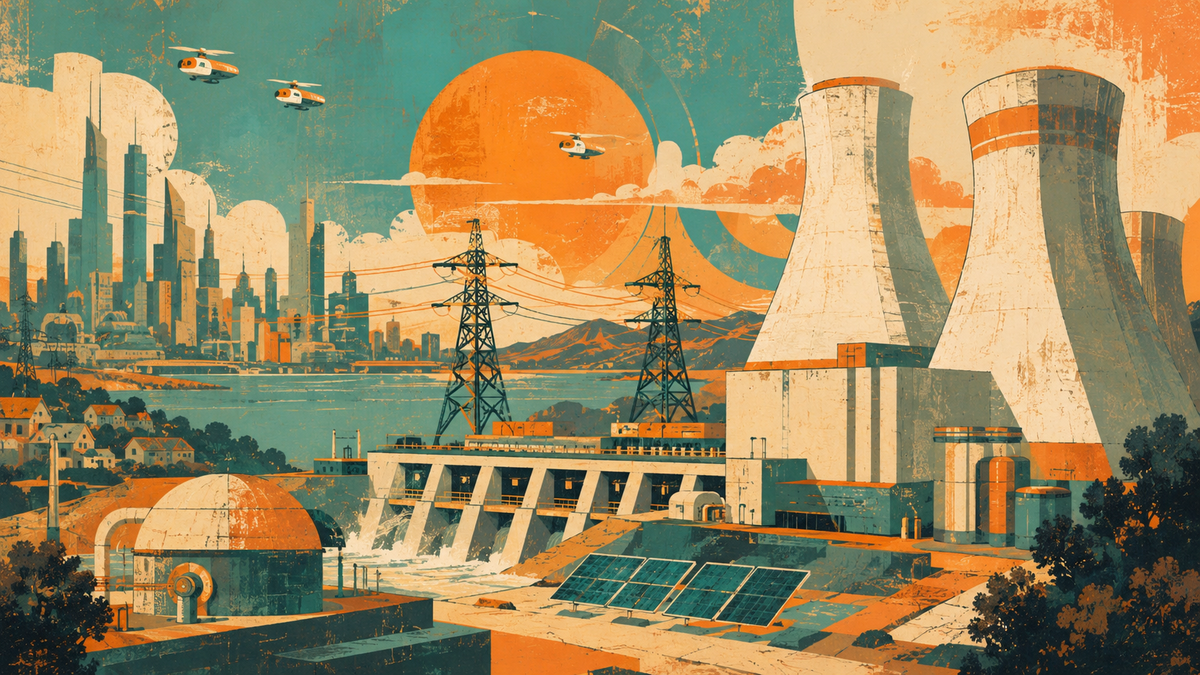
PowerPlay 2045 is set, as the name suggests, in the year 2045, in South Africa. In this timeline, AI companies control much of the means of production and generate a great deal of the country's profits, which are returned to communities in the form of grants. There's just one problem: the power grid is struggling to keep up. In response, the government has subsidised the formation of four private power plants, and each player runs one of them in a four-player game.
These plants produce electricity to sell, but only to buyers they've physically connected to with routes, and the two types of buyer behave very differently. Communities are loyal and will only ever buy from the first plant that connects to them. AI companies, on the other hand, are ruthlessly capitalist and will buy from whoever is cheapest. If three players are all connected to the same AI company, a price war breaks out to see who makes the sale.
Each turn represents a month, and in it a player takes three actions from a simple menu: build a route towards a buyer, expand the plant to produce more electricity, or enhance the plant to produce electricity more cheaply. Simple choices, but they pull against each other constantly. Expand too fast and you have electricity nobody is connected to buy. Chase routes too hard and your rivals out-produce you. Ignore efficiency and you lose every price war that matters.
Throughout the game, players are connected to a mobile app with a friendly AI assistant called Gridley, who can read the latest board state and help them reason through their options without ever taking over. The app is also where players are free to strike non-binding deals with each other, and non-binding is the operative word. Whether anyone honours those deals is entirely up to them, which tells us plenty on its own.
At the end of the game, each player receives a score out of 100 that works like a share price. It reflects how faithful they've been to their communities, how much electricity they've sold to the AI companies, how efficient they've been in terms of electricity produced versus sold, the number of routes they've built, and the cash they hold at the close. There is deliberately no single path to a high score, because we didn't want a game with a perfect strategy. We wanted one where players adapt to changing board conditions and where every decision is a trade-off.
Getting there took work. We chopped and changed our way through a dozen variants and ran over 100,000 AI simulations, with AI agents playing the game end to end, to make sure it was balanced and that no degenerate strategy dominated. A game-based assessment is only as good as the game, and a broken game produces broken data.
Candidates get an experience that's genuinely engaging instead of laborious. Hiring teams get data that has simply never existed in the recruitment process. And the reflection conversation afterwards, walking back through their decisions with them, tells us more about a person than any panel interview we've ever sat in.
Back to Camps Bay
Which brings us back to that room on the 20th of May. Underneath those ninety minutes of silence, a stream of decisions, trade-offs, recoveries, and AI interactions was being captured in a way no interview could ever manage. And when the games ended, the room erupted. Students compared strategies, defended their choices, and pointed out, unprompted, what they'd do differently next time. The reflection had started before we'd even asked a question.
We built PowerPlay 2045 because we needed it. We're sharing it because we suspect you do too.
Have a look at www.powerplay2045.co.za.