Part 1: The Name on the Plaque at a Denny's Booth
A week or so back, as I fired up the treadmill, I was faced with the hollow feeling of having finished one of the all-time great treadmill shows, Lincoln Lawyer, and having to make a new commitment. Shoulders slumped, I ran the old "similar shows" search and my eye landed on Daredevil: Born Again. Time was ticking. In an effort to save the workout, I messaged the most knowledgeable friend I could find, and he fired back with the confidence of the office introvert when the conversation turns to guns. "Bro. You need to watch the original Daredevil. Then Jessica Jones. Punisher. Defenders. Then come back to Born Again."
Knowing there was about as much chance of me watching all of that as there was of Matt Murdock himself tuning in, I walked briskly in silence until a thought occurred to me. This is probably how a lot of people who don't work in AI feel about AI.
Unless AI is your whole personality, it's become almost impossible to keep track. GPT-4, GPT-5, Claude, Gemini, agents, MCP, reasoning models, Sora, DeepSeek, the Stargate announcement, Nvidia hitting four trillion dollars, the OpenAI board firing Sam Altman and rehiring him over a weekend — all of that happened in about thirty months. New models, new companies, new jargon, new existential debates, all arriving faster than anyone with a job and a life can reasonably follow.
So we thought it would be useful to go back to the beginning and give anyone interested in AI — regardless of how technical they are — the context to actually understand what's happening and why. Not the deep-technical beginning. I'm not going to make you sit through matrix multiplication. The story beginning. Because the AI moment we're living in makes a lot more sense once you know the players on the board and how they got there.
This first piece covers what we're calling the BC Era — Before ChatGPT. All the big players that now make up what we call AI — the companies, the researchers, the rivalries, the bets — were in motion long before most people heard the word. And before we get to the software and the models, the story starts with hardware and Denny's bottomless coffee.
The Chip that ate the World
Our story begins in the late '80s — Whitney on the radio, shoulder pads in the boardroom, neon at night, and VHS rental stores on every corner. It's a decade of excess: greed, fashion, hair, colour, and prejudice. But for all that abundance, one thing was still in remarkably short supply: computing power.
A computer, as the name suggests, exists to compute — to process information by following rules to get a result. The small miracle that makes this possible is the (micro)chip, a tiny piece of silicon packed with millions of microscopic switches. As electricity moves through it, those switches flip on and off, creating simple yes-or-no signals. Put billions of those signals together every second, and you get everything a computer does, from opening a file to rendering a film frame.
By then, computers had started appearing in offices and the occasional living room. The chips inside them were cheap enough for mass production, which was the whole point, but cheap also meant limited. These machines could handle word processing, spreadsheets, and basic databases.
If you wanted to do heavier work, like designing a car, modelling the weather, simulating a jet engine, or rendering the water tentacle in James Cameron's The Abyss, you needed something else entirely: a custom-built machine called a workstation with a price tag to match. They often cost more than a car, because they were built for specialised jobs and demanded specialised hardware: custom-designed chips, highly trained engineers, and expensive components assembled for performance rather than scale.
Designers, Drivers and Denny's Diners
One of the companies building them was Sun Microsystems. Chris Malachowsky and Curtis Priem, both electrical engineers in their late 20s, worked there designing one specific kind of chip: the graphics chip, responsible for taking whatever the computer wanted to show you and actually drawing it on the screen. Sun's workstations weren't drawing spreadsheets. They were drawing rotating 3D jet engines and frames of film with light bouncing off water.
Chris and Curtis sat on the design side, which is closer to designing a city than writing software — laying out, on a microscopic scale, where every switch goes, how electricity flows between them, and which patterns trigger which outcomes, all etched permanently into silicon. But a finished design is only half the work. Someone still has to pour the foundation: take the blueprint and drive how to actually build it at scale, solving the thousand small problems that come up when theory meets a factory floor. Sun brought in a company called LSI for that, and LSI sent over one of their younger engineers to help. The three of them spent enough hours troubleshooting together in Sun's offices that they became friends. Chris and Curtis were impressed by young Jensen Huang. But then, who wouldn't be.
Jensen Huang's life reads like something a screenwriter would be told to tone down. Born in Taiwan in 1963, raised partly in Thailand, and shipped off to relatives in America at nine years old without a word of English. Those well-meaning relatives accidentally enrolled him and his older brother in what they thought was a prestigious Kentucky boarding school but turned out to be a reform school for troubled boys. While Jensen scrubbed toilets as part of the daily chores, his brother spent afternoons working in the tobacco fields out back. Jensen, the only Asian kid there, was assigned a roommate covered in stab wounds who taught him how to lift weights; Jensen, in return, taught the roommate how to read. The family eventually reunited in Oregon, where a teenage Jensen took a part-time job at the local Denny's — washing dishes, bussing tables, waiting on customers through the rolling chaos of a diner rush. He still credits that job, decades later, for the fact that his heart rate goes down when the stakes go up.
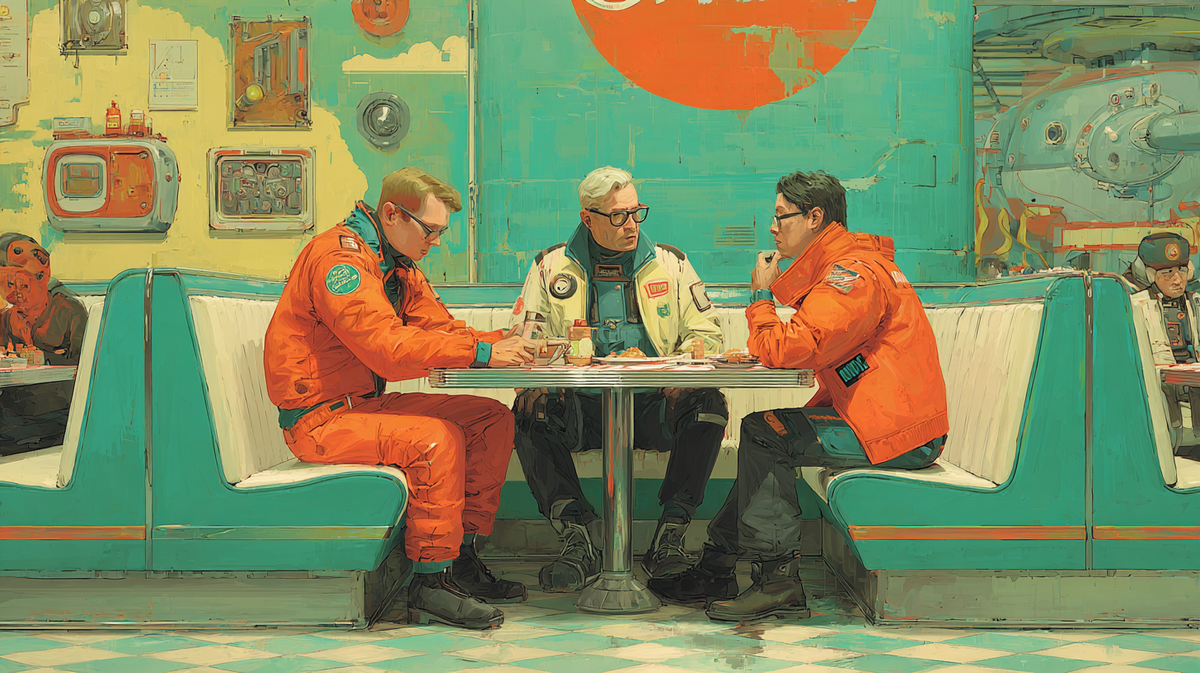
And so in '93, at a Denny's booth just off Highway 101 in East San Jose, over a bottomless cup of coffee, the three friends finally acted on an idea they'd been circling for months. The personal computer was about to get cheap enough for ordinary people, and ordinary people, they were convinced, were going to want it to do one specific thing: play games. Games needed graphics. Graphics needed a specialist chip. And nobody was building that chip for the consumer market yet.
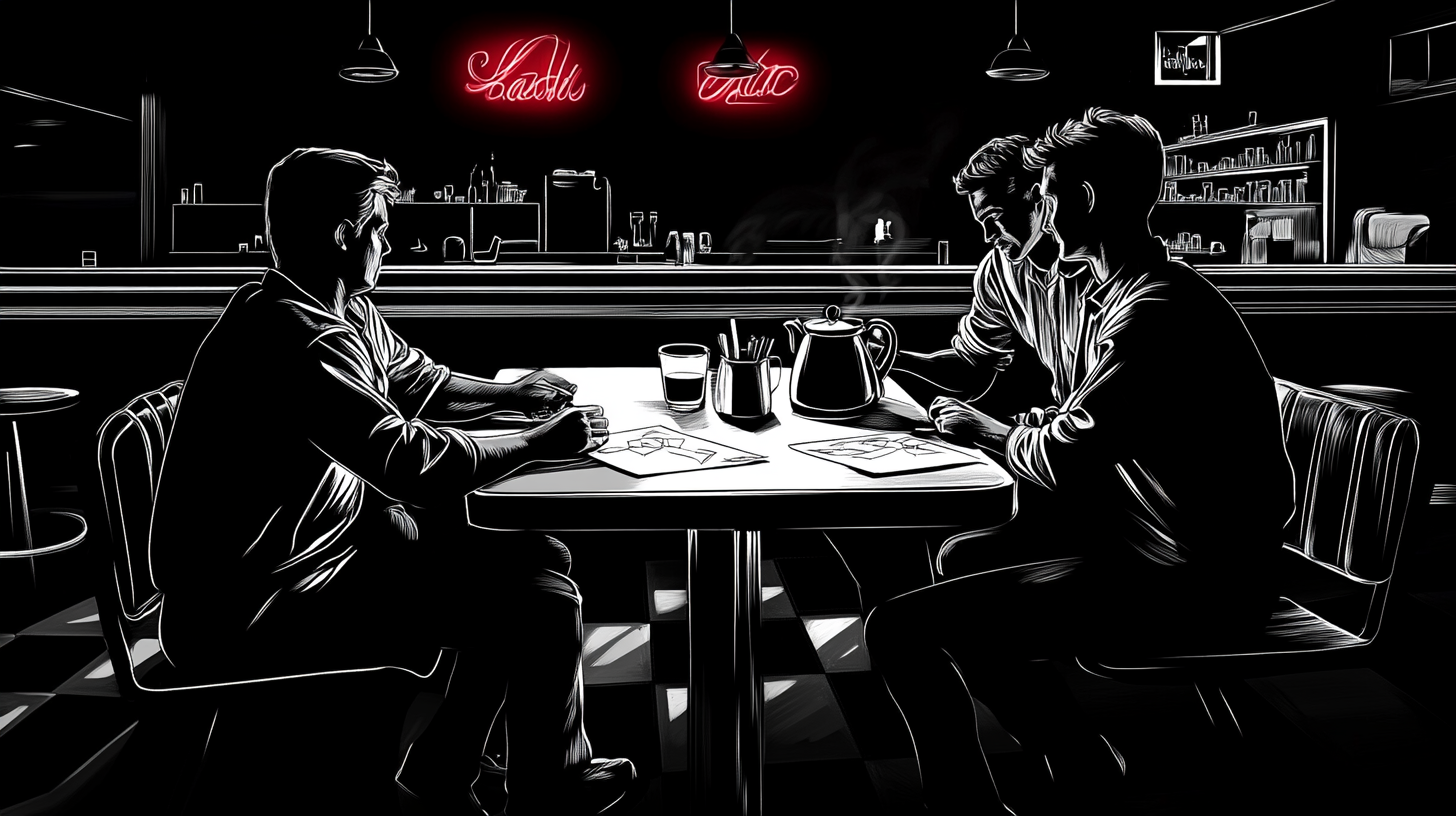
They wanted every competitor to be envious of their product, so for a name they went with a slight derivation of the Latin word for envy. It's a name now plastered on a plaque at that Denny's booth. Nvidia. A company that would produce the chip that ate the world. They just didn't know it yet.
→ Next: The Godfather's 40-Year Bet
Read the full series: Modern AI History